
Dolly Casino in Review: What Stands Out for NZ Players
An informational, non-promotional look at what the dolly casino offshore platform offers Kiwi players.
Last updated: 13 July 2026

Casino Overview
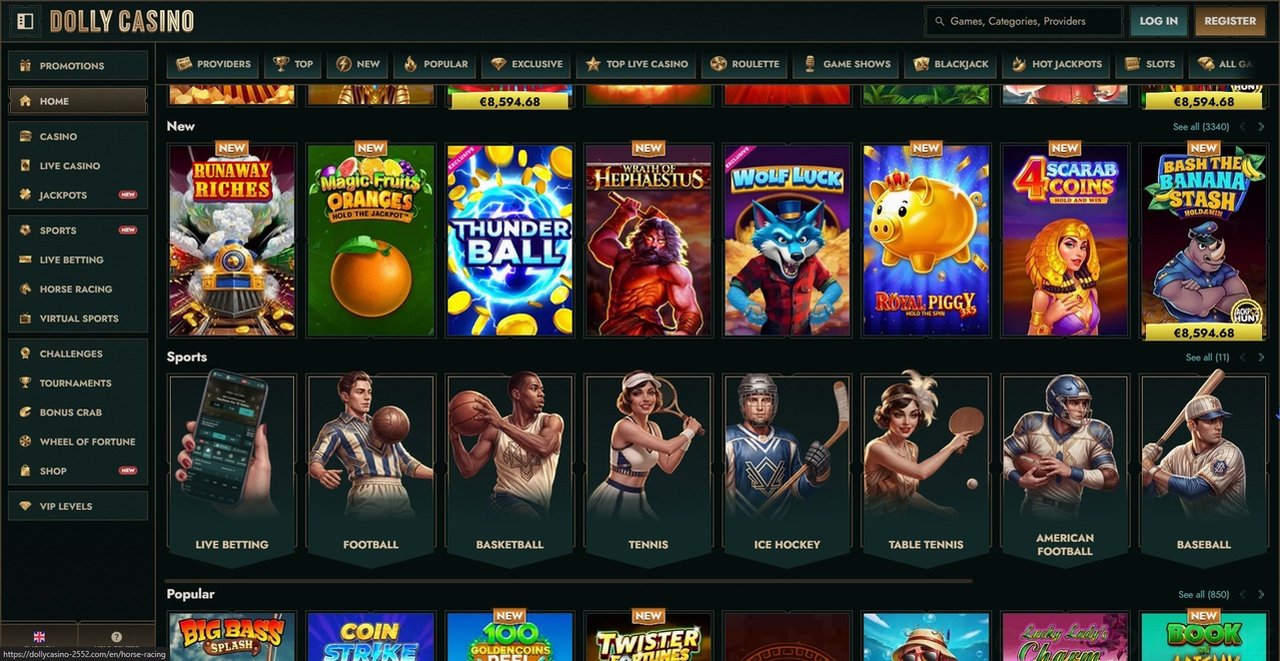
Dolly casino presents itself as a broad-spectrum online gaming site, offering pokies, table games, and live dealer products through a web-based platform accessible from New Zealand without a dedicated local licence. Like most operators serving the NZ market at present, it is not based in New Zealand and does not hold any authorisation from New Zealand's regulator — a point that applies to virtually every online casino Kiwi players currently use, simply because no such local licensing framework has existed until now.
The platform's interface is typical of modern casino sites: a searchable lobby, category filters for game types, and promotional banners for current offers. For New Zealand visitors, the site typically displays pricing in NZD or lets players select it as a display currency, even though the underlying settlement currency may differ depending on the payment method chosen.
It's worth noting that "dolly pokies" and other slot-style games make up the bulk of the catalogue, consistent with player demand data across most offshore operators serving Australasia. Table games, live dealer studios, and a smaller selection of speciality titles round out the offering.
Dolly casino is an offshore online gaming platform that Kiwi players may come across while researching options for pokies and table games on the internet. This guide takes an informational, non-promotional look at what the operator offers, how it handles licensing and security, and what New Zealand players should understand about the wider regulatory picture before signing up anywhere online. As New Zealand transitions toward its own licensing regime, understanding how offshore platforms like dolly casino operate has never been more relevant for informed decision-making.
This dolly casino review does not endorse or discourage use of the platform. Instead, it aims to equip readers with the practical knowledge — from game libraries to banking rails to responsible gambling tools — needed to evaluate any offshore casino site with a critical eye.
Game Library
The dolly casino games catalogue is built primarily around video pokies, sourced from multiple third-party software studios rather than developed in-house. This multi-provider model is standard across the offshore casino sector and gives players variety in themes, volatility levels, and bonus mechanics.
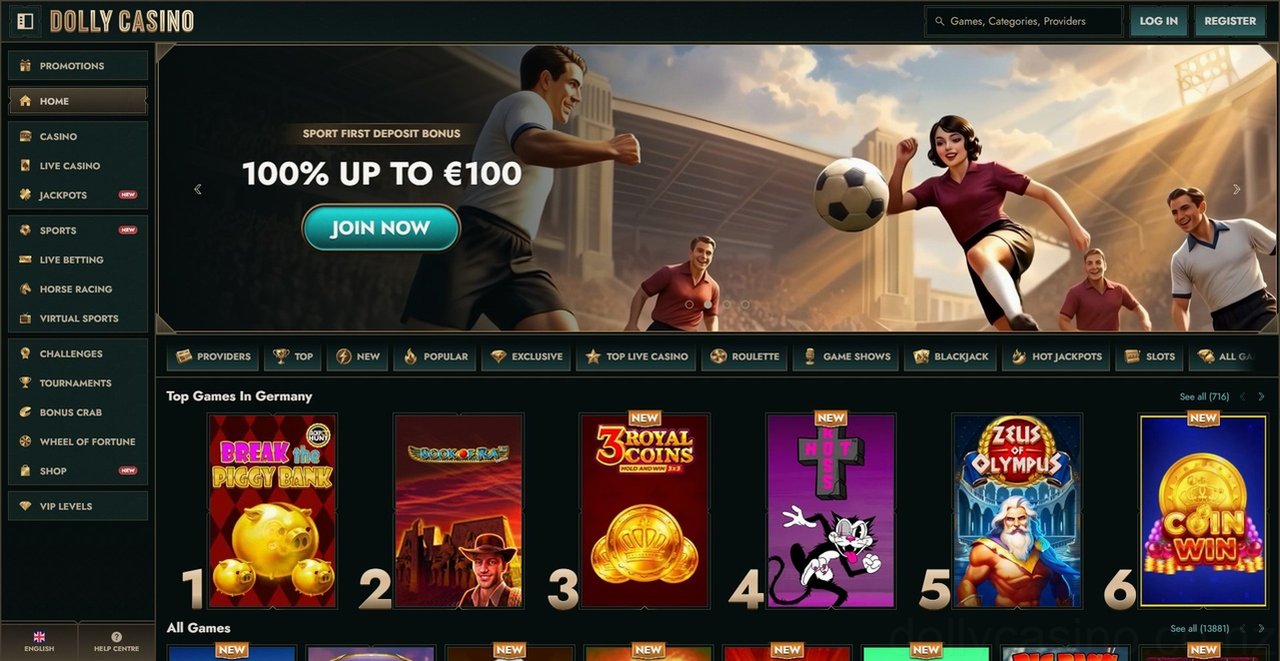
Beyond pokies, the platform typically includes digital versions of blackjack, roulette, baccarat, and poker variants, along with a live dealer section streaming real-time tables hosted by croupiers. Live sections usually rely on a smaller number of specialist studios given the production costs involved.
When assessing any casino's game library, Kiwi players should look beyond sheer game count and consider provider reputation, since established studios are more likely to have their random number generators (RNGs) independently tested.
Most-played slots at Dolly Casino
Dolly Casino features a diverse slots library with titles like Book of Dead (96.21% RTP) and Jammin' Jars (96.83% RTP) alongside classic reels such as Sizzling Hot Deluxe. Players can explore varying volatility levels and themes across the collection.





































Popular Software Providers
The credibility of a casino's game library is closely tied to the reputation of its software partners. Well-known studios are typically subject to independent testing by recognised labs, and their return-to-player (RTP) figures are published and audited.
| Provider Type | Typical Output | Testing Relevance |
|---|---|---|
| Major international studios | Video pokies, jackpot titles | Often certified by independent labs |
| Live casino specialists | Streamed table games | RNG/shuffle fairness independently reviewed |
| Niche/smaller studios | Table games, speciality titles | Testing standards vary by jurisdiction |
Studios powering Dolly Casino
The casino partners with established software developers including Pragmatic Play, Play'n GO, and NetEnt, each operating under strict RNG certification and independent audits from recognised testing laboratories to ensure fair gameplay.








Players should check the game information panel (usually an "i" icon within each title) for the disclosed RTP percentage and volatility rating before playing, as these figures directly affect long-term outcomes, even though no percentage guarantees short-term results.
Licensing & Safety
This is the most important section for New Zealand readers to understand clearly. Dolly casino, like the overwhelming majority of online casinos currently accessible to Kiwi players, operates under a foreign licence — commonly issued by authorities such as the Malta Gaming Authority (MGA), the Curaçao Gaming Authority, or the Kahnawake Gaming Commission. These are legitimate offshore regulatory bodies that impose their own standards on operators, but none of them constitute New Zealand authorisation.
New Zealand is in the process of establishing its first-ever domestic online casino licensing regime under the Online Casino Gambling Act 2026 , which comes into force on 1 May 2026 and is administered by the Department of Internal Affairs (DIA) / Te Tari Taiwhenua . Under this Act, up to 15 licences will be allocated during 2026, with the first DIA-issued licences taking effect from 1 December 2026 , and the full regime expected to be operational through 2027.
As of the time of writing, no online casino operator holds a DIA licence . This means that every online casino currently used by New Zealanders, including dolly casino, operates offshore and outside New Zealand's regulatory oversight. It is important to state this plainly: a foreign MGA, Curaçao, or Kahnawake licence does not make a platform "licensed in New Zealand," "regulated," or "legal in New Zealand" — those descriptions will only become accurate for operators that obtain a DIA licence from December 2026 onward.
It is not a criminal offence for an individual New Zealander to play at an offshore casino site — the new Act targets unlicensed operators and advertisers, not individual players. However, playing offshore means forgoing any New Zealand consumer protection, dispute resolution, or regulatory recourse. If a dispute arises with an offshore operator, players are limited to that operator's own complaints process or the dispute mechanisms of its foreign licensing body.
What Offshore Licensing Typically Covers
Foreign licensing authorities generally require operators to meet baseline standards around fund segregation, RNG certification, and complaint handling, though enforcement rigour varies significantly between jurisdictions.
- MGA (Malta): Considered a stricter European framework, with regular audits and player fund protection rules.
- Curaçao: A high-volume licensing jurisdiction with a lower barrier to entry historically, though reforms have tightened oversight in recent years.
- Kahnawake: A Canadian First Nations-based authority with its own technical and dispute standards.
Independent testing bodies such as eCOGRA and iTech Labs are frequently referenced in the industry for auditing RNG fairness and RTP accuracy. Players can often verify whether a specific game has been certified by checking the provider's own compliance documentation or the testing lab's public registry, though this diligence sits with the player when using an offshore site.
| Aspect | Offshore Licence (e.g., MGA/Curaçao/Kahnawake) | Future DIA Licence (from Dec 2026) |
|---|---|---|
| Authority | Foreign regulator | New Zealand Department of Internal Affairs |
| NZ consumer protection | None | Will apply once issued |
| Currently available? | Yes, widely used | Not yet — first licences from 1 Dec 2026 |
| Legal status for NZ players | Not illegal to play, no local oversight | Will be NZ-authorised |
Bonuses
Dolly casino bonuses generally follow the standard offshore industry template: a welcome package for new depositors, followed by recurring promotions such as reload bonuses, free spins offers on selected pokies, and loyalty or VIP schemes for regular players. As with any online casino, the headline percentage or dollar figure matters far less than the fine print governing how the bonus can actually be used.
Wagering requirements — the multiple of the bonus (or deposit + bonus) that must be played through before withdrawal — are the single most important term to check. A 35x wagering requirement on a bonus is considerably harder to clear than a 20x requirement, even if the headline bonus amount looks similar.
Typical Bonus Terms to Review
Before accepting any bonus offer, Kiwi players should work through a short checklist to understand what they're actually agreeing to.
- Wagering requirement: The playthrough multiple applied to the bonus or deposit+bonus amount.
- Game weighting: Pokies often count 100% toward wagering, while table games may count much less or not at all.
- Maximum bet while wagering: Many bonus terms cap the stake per spin (e.g., NZD 5) — exceeding it can void winnings.
- Withdrawal caps: Some bonuses limit how much bonus-derived winnings can be withdrawn, regardless of the amount won.
- Expiry period: Bonuses and their winnings often expire within 7–30 days if wagering isn't completed.
| Bonus Type | Common Structure | Key Watch-Out |
|---|---|---|
| Welcome bonus | Match on first deposit, sometimes with free spins | Check wagering multiple and max bet rule |
| Reload bonus | Smaller match on subsequent deposits | Often has shorter expiry windows |
| Free spins | Fixed number on a specific pokie | Winnings may still carry wagering requirements |
| Loyalty/VIP scheme | Points or cashback for ongoing play | Redemption thresholds can be high |
As a matter of financial literacy rather than promotion: no bonus offer, regardless of size, changes the underlying mathematics of a game's RTP. A bonus can extend playtime, but it does not create guaranteed value, and any terms suggesting otherwise should be treated as a red flag.
How to Start
Create Account
Register an account and verify you are 18 and over.
Verification
Complete KYC identity verification — standard practice before your first withdrawal.
First Deposit
Choose from bank cards, e-wallets, cryptocurrency or bank transfer.
Play & Win
Explore pokies, table games and live dealer titles responsibly.
Banking
Because dolly casino operates offshore rather than under a New Zealand banking-integrated licence, payment options tend to lean on international rails, e-wallets, and increasingly, cryptocurrency — partly because some New Zealand banks apply extra scrutiny or blocks to card payments destined for offshore gambling sites.
This is a practical reality many Kiwi players encounter: a bank-issued Visa or Mastercard transaction to an offshore casino can be declined or flagged, even when the player intends a legitimate, small-value deposit. E-wallets and crypto payments are often used as a practical workaround, though they carry their own considerations around volatility (for crypto) and fees (for e-wallets).
Common Payment Methods
The exact methods available vary by operator and can change over time as payment processors adjust their gambling-related policies. Broadly, offshore platforms serving NZ players tend to offer a mix of the following categories.
- Bank cards: Visa and Mastercard remain common, though some NZ-issued cards may be declined by the issuing bank for gambling transactions.
- E-wallets: Digital wallets are popular for faster processing and an added layer between a player's bank account and the casino.
- Cryptocurrency: Bitcoin, Ethereum, and stablecoins are increasingly supported, offering an alternative when card payments are restricted.
- Bank transfer: Slower but sometimes used for larger withdrawals.
| Method | Typical Speed | NZD Support | Notes |
|---|---|---|---|
| Bank cards | Instant deposit, 1–5 days withdrawal | Often yes | Subject to bank-side gambling blocks |
| E-wallets | Instant to same-day | Varies | May involve currency conversion fees |
| Cryptocurrency | Minutes to hours | No (crypto-denominated) | Value fluctuates; no bank intermediary |
| Bank transfer | 1–5 business days | Yes | Best for larger, less time-sensitive transactions |
Before depositing anywhere, it's worth checking the operator's stated minimum/maximum withdrawal limits, any processing fees, and whether identity verification (KYC) is required before the first withdrawal — a standard practice, not a red flag, though the timing and document requirements should be reviewed in advance to avoid surprises.
Customer Support
Customer support quality varies widely across offshore casino operators, and it's an area players should test with low-stakes questions before relying on it for anything urgent, such as a delayed withdrawal. Typical channels include live chat, email ticketing, and sometimes an FAQ or help centre with self-service articles.
Response times for live chat are generally the fastest, though availability may not be 24/7 for every operator. Email support tends to be reserved for more complex account or verification issues, and response times can range from hours to a few days depending on the operator's staffing and query volume.
When evaluating support quality, look for clarity and consistency in the answers given, a documented complaints escalation path, and whether the operator references its licensing authority's dispute resolution process for unresolved issues — since offshore operators do not fall under any New Zealand ombudsman or regulator for complaint handling.
Pros and Cons
Pros
- Wide game variety across pokies, table games, and live dealer formats.
- Crypto and e-wallet options can bypass bank-side payment friction.
- Bonus offers and loyalty schemes are generally more frequent than land-based equivalents.
Cons
- No New Zealand licensing, oversight, or consumer protection currently applies.
- Dispute resolution depends entirely on the foreign licensing authority's process.
- Bonus terms can be complex, with wagering requirements that are easy to misjudge.
Weighing the practical advantages and drawbacks of using an offshore platform like dolly casino helps frame realistic expectations, particularly given New Zealand's current regulatory transition.
Responsible Gambling
Responsible gambling is a mandatory consideration for any casino guide, and it applies regardless of whether a platform is offshore or eventually DIA-licensed. Online casino play in New Zealand is restricted to those aged 18 and over , and this age threshold should be verified during account registration on any platform.
Because dolly casino operates offshore, New Zealand does not yet have a live national self-exclusion register that could block access to it — that register is mandated under the incoming regime by December 2027 but is not yet operational. In the meantime, players wanting to limit or stop their play should rely on the tools available directly through the operator, alongside independent software-based blockers.
- Operator-level tools: Deposit limits, session time reminders, cooling-off periods, self-exclusion, and full account closure requested directly through dolly casino's account settings or support.
- Independent blocking software: Tools such as Gamban or GamBlock can restrict access to gambling sites across a device, independent of any single operator's cooperation.
- Support services: The Gambling Helpline and safergambling.org.nz offer free counselling referrals and practical guidance for reducing harm.
Setting personal deposit and time limits before starting to play, and treating any losses as the cost of entertainment rather than a recoverable expense, are widely recommended practices for safer, more sustainable play.
How casino game mechanics work
Understanding the mechanics behind online pokies and table games helps demystify outcomes and supports more informed play, rather than relying on myths about "hot" or "cold" machines.
At the core of every digital pokie is a Random Number Generator (RNG) — an algorithm that produces unpredictable outcomes for each spin, independent of previous results. This means that, mathematically, no spin is "due" to hit after a losing streak; each outcome is statistically independent. Reputable providers submit their RNG software for periodic independent testing by labs such as iTech Labs or eCOGRA, which verify that outcomes fall within the statistically expected distribution over large sample sizes.
Return to Player (RTP) is a theoretical percentage representing how much of all wagered money a game is designed to return to players over millions of spins — it is a long-run statistical average, not a promise for any individual session. A pokie advertising a 96% RTP, for example, is mathematically designed to return NZD 96 for every NZD 100 wagered over an enormous number of spins, with the remaining 4% representing the house edge. Short sessions can and do vary wildly from this average in either direction.
Volatility (or variance) describes how a game pays out over time: low-volatility pokies tend to produce smaller, more frequent wins, while high-volatility titles offer larger but rarer payouts. Neither is inherently "better" — it's a matter of playing style and risk tolerance, and volatility ratings are usually disclosed in the game's information panel.
Live dealer games work differently, since outcomes are determined by physical cards, dice, or roulette wheels captured via live video stream rather than an RNG algorithm — though the shuffling and dealing processes are still subject to regulatory and technical scrutiny by the relevant licensing authority to ensure fairness.
Security infrastructure also matters: reputable casino platforms use SSL (Secure Sockets Layer) encryption to protect data transmitted between a player's device and the casino's servers, including payment details and personal information. Players can typically verify this by checking for "https://" and a padlock icon in their browser's address bar before entering any sensitive information.
FAQ
Is dolly casino licensed in New Zealand?
No. As of now, no online casino holds a New Zealand DIA licence. Dolly casino operates under a foreign/offshore licence, which does not equate to New Zealand authorisation.
Is it illegal for me to play at dolly casino from New Zealand?
Playing at an offshore casino as an individual is not a criminal offence under New Zealand law; the new Act targets unlicensed operators and advertisers rather than players. However, no New Zealand consumer protections apply to offshore play.
When will New Zealand have its own licensed online casinos?
Under the Online Casino Gambling Act 2026, DIA licences are being allocated during 2026 and issued from 1 December 2026, with the fuller regime operating through 2027.
What is the minimum age to play online casino games in New Zealand?
18 years old for online casino play. A higher age of 20 applies specifically to land-based casino floors, not online gaming.
Do I pay tax on winnings from dolly casino?
Recreational gambling winnings are generally not taxed in New Zealand for individual players.
Are dolly casino's pokies fair?
Game fairness depends on the software provider and any independent RNG/RTP certification (e.g., from eCOGRA or iTech Labs) applicable to specific titles — players should check individual game info panels for disclosed RTP.
What withdrawal times can I expect?
Cryptocurrency processes in minutes to hours, e-wallets instant to same-day, bank cards 1–5 days for withdrawal, and bank transfers 1–5 business days. Timing varies by operator.
Are crypto payments and mobile play supported?
Bitcoin, Ethereum, and stablecoins are increasingly supported, offering an alternative when card payments are restricted. The platform is web-based and accessible from New Zealand.
Final Verdict
Dolly casino reflects a fairly typical profile among offshore operators currently serving the New Zealand market: a broad pokies and table game library, a standard tiered bonus structure with the usual wagering caveats, and payment options that lean into e-wallets and crypto to work around banking friction. None of this makes it unusual — it's representative of the offshore landscape Kiwi players have navigated in the absence of a domestic licensing framework.
The most important takeaway from this dolly casino review is not about the platform's specific features, but about context: New Zealand is actively building its first domestic online casino licensing regime under the DIA, with licences issuing from December 2026. Until then, every operator accessible to Kiwi players — dolly casino included — operates offshore, under foreign licensing frameworks that do not carry New Zealand regulatory backing or consumer protection.
For players who choose to engage with offshore platforms in this interim period, the practical advice is consistent: verify game RTPs, read bonus terms in full before opting in, use secure and traceable payment methods, and lean on the responsible gambling tools available — both from the operator and independent resources like the Gambling Helpline — to keep play within sustainable limits.